
#01 · Before the Assembly
Amplify Minoritised Voices
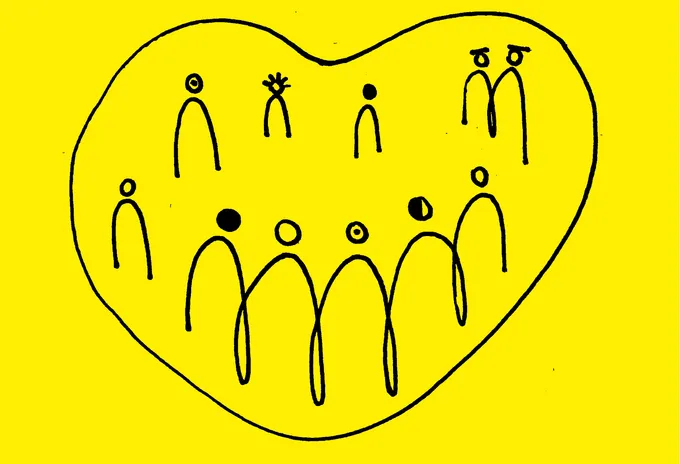
How to ensure participation from marginalised groups as assembly members? How to ensure that the voices of the most vulnerable are being heard and valued?
#01 · Before the Assembly
How to ensure participation from marginalised groups as assembly members? How to ensure that the voices of the most vulnerable are being heard and valued?
Inclusion is widely seen as the core of CCAs, contributing to their democratic legitimacy, the quality of knowledge produced, and fairness in decision-making. However, from a decolonial perspective, it is not only a question of who is included, but also on whose terms people participate and contribute meaningfully.
Addressing social marginalisation based on class, race, gender, ability, sexual orientation, and other intersecting aspects is essential for just climate solutions. Nevertheless, they also call for ‘epistemic disobedience’ and the recognition of a variety of democratic practices.
Structural barriers continue to influence participation, often perpetuating marginalisation and vulnerabilities. These include limited accessibility, time and financial constraints, incompatibility with unstable employment, caregiving responsibilities, and mistrust of institutions. Even when marginalised individuals are present, they may experience “epistemic vulnerability”; they may be interrupted more, listened to less, or perceived as less credible. Discursive vulnerability occurs when problem framings or technical jargon make lived experiences unintelligible or marginal. Meaningful participation, therefore, requires not only broadening access, but also pluralising knowledge and making diverse ways of knowing visible and consequential. Ensuring Knowledge Diversity.
Partnering with local community groups and NGOs to reach marginalised populations. Global Citizens’ Assembly, the Civic Assembly Oregon included homeless people via local service organizations.
Spin-offs to provide culturally and linguistically appropriate spaces for specific groups. In The New Berliners’ Council on Climate Protection, randomly selected newcomers from Syria, Morocco, Iran, Afghanistan, and Ukraine discussed the same questions as the general assembly.
Childrens Rights in Deliberative Democracy were addressed in the Children’s Parliament run in parallel to the SchottishCCA whose calls to action were integrated into the Final Report. KNOCA Guidance.
Removing barriers by providing care services for children, elderly, etc.; adapting time slots to public transport; financial compensation; language support and accessible communication; creating accessible spaces (incl. room acoustics and lighting); personalized support and a legal right to paid work leave. CLIMAS Manual, Abschlussbericht Klimabürgerrat 2024 (p.88).
Holding assemblies in different locations enables participation across a region. The Catalan CCA took place in six cities across the Catalan territory (CLIMAS Best Practice Cases, p.4).
Dynamic Facilitation moderation techniques are used in Austrian Wisdom Councils, and CAs following the Vorarlberg model to counter inequalities.
Banerjee, S. B. (2022). Decolonizing Deliberative Democracy: Perspectives from Below. Journal of Business Ethics, 181(2), pp. 283-299. doi:10.1007/s10551-021-04971-5
García-Espín, P. (2023). Class Inequalities and Participatory Democracy: Assessing the Impact of Social Inclusion Tools in Citizens’ Assemblies. Political Studies Review, 22(3), 585-607. https://doi.org/10.1177/14789299231179081 (Original work published 2024)
Karpowitz C. & Raphael C., (2016) “Ideals of Inclusion in Deliberation”, Journal of Public Deliberation 12(2). doi: https://doi.org/10.16997/jdd.255
Veloso, L., Curato, N., Ross, M., & Morán, A. (2025). Vulnerability is not a checklist: Grounded Normative Theory in global deliberation. Qualitative Research, 0(0). https://doi.org/10.1177/1468794125134199