
#02 · Before the Assembly
Ensuring Knowledge Diversity
Which forms of knowledge are present? Whose narratives are given space? Who are invited as testimonials?
[ KW ] Keywords
[ PH ] Phases
[ REL ] Related
—
#02 · Before the Assembly
Which forms of knowledge are present? Whose narratives are given space? Who are invited as testimonials?
—
Often, CCAs focus on scientific and “expert” knowledge as inputs, while participants’ lived experiences, knowledge, and diverse perspectives tend to be limited to the in-group deliberation. This emphasis risks reproducing hierarchies of knowledge and limiting the transformative potential of inclusive and just deliberation. The composition of scientific committees, expert boards, or wisdom councils and how the learning phase is framed shape the scope and values of collective deliberation.
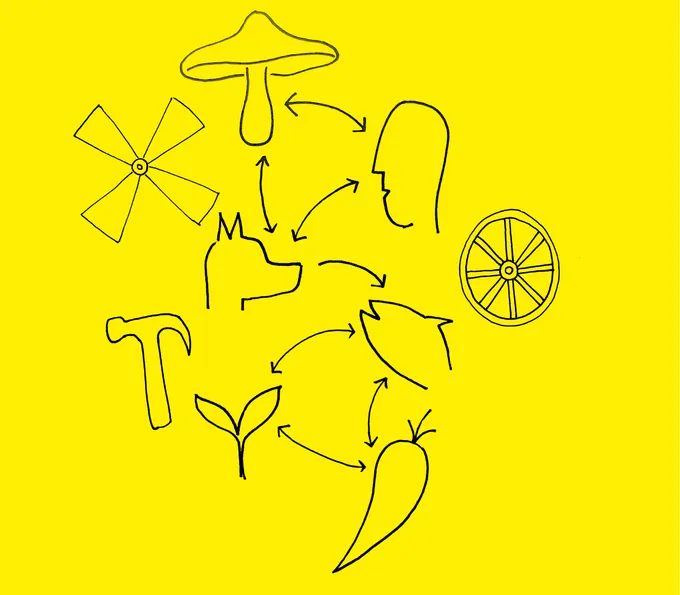
Ensuring epistemic diversity means systematically including a range of perspectives and opinions, which is strengthened by recognising distinct experiences and collective insights. CCAs benefit when they integrate diverse knowledge forms to address the problem at stake. Scientific and policy-making administrative knowledge can be complemented with situated forms of knowledge and ancestral wisdom, particularly from communities most affected by climate change, often in the Global South or socially marginalised contexts. Therefore, the composition of expert committees and the framing of the learning phase are decisive, as they can either reproduce hegemonic paradigms and technocratic “business as usual” hierarchies or open up space for plural, equitable deliberation.
The Global Citizens’ Assembly brought together scientific evidence with ancestral knowledge and the lived experience of those affected by the climate crisis, inviting representatives of the vulnerable and marginalized. As translation is seen as an ongoing mediation, the multiple languages spoken were translated via AI-supported tools (custom interface, not just off-the-shelf) combined with human facilitation to interpret meaning.
Recognising diverse knowledges and lived experience as expertise can be facilitated by formats such as storytelling, visual expression, embodied practices, and inclusive, multilingual facilitation.CLIMAS Manual
Providing space for emotional, spatial, tactile, and affective knowledge and Embodied activism through non-verbal bodily expression like sound, dance, visual expression: Theatre of the Oppressed (TO) (Augusto Boal) or Walking methods that access embodied, place-based knowledge through movement and spatial experience achieved through physical engagement with the environment, or incorporating tactile and sentient aspects into deliberation e.g. through crafts like embroidery.
Austrian Wisdom Councils, CCAs following the Vorarlberg model validate experiential and emotional knowledge alongside technical expertise through Dynamic Facilitation.
Mendonça, RF, Ercan, SA, Asenbaum, H (2022): More Than Words: A Multidimensional Approach to Deliberative Democracy, Political Studies 1(70): 153-172, https://doi.org/10.1177/0032321720950561
Asenbaum H., (2016) “Facilitating Inclusion: Austrian Wisdom Councils as Democratic Innovation between Consensus and Diversity”, Journal of Public Deliberation 12(2). doi: https://doi.org/10.16997/jdd.259
Anderson E. The Epistemology of Democracy. Episteme. 2006;3(1-2):8-22. doi:10.3366/epi.2006.3.1-2.8
Bohman J. Deliberative Democracy and the Epistemic Benefits of Diversity. Episteme. 2006;3(3):175-191. doi:10.3366/epi.2006.3.3.175
Capstick, S.B., Demski, C., Cherry, C., Verfuerth, C., & Steentjes, K. (2020). Climate change citizens’ assemblies: CAST briefing paper 03.
Krick, E. (2021). Citizen experts in participatory governance: Democratic and epistemic assets of service user involvement, local knowledge and citizen science. Current Sociology, 70(7), 994-1012. https://doi.org/10.1177/00113921211059225 (Original work published 2022)
Schmid, P., Lamotte, L., Curran, M., & Bieri, S. (2024). Creating pathways to just and sustainable food systems with citizen assemblies. Innovation: The European Journal of Social Science Research, 37(3), 832–850. https://doi.org/10.1080/13511610.2024.2309173
https://www.knoca.eu/news/new-report-on-more-than-human-governance
Stern, T. (2019). Participatory action research and the challenges of knowledge democracy. Educational Action Research, 27(3), 435-451.