
#01 Before the Assembly
Amplify Minoritised Voices
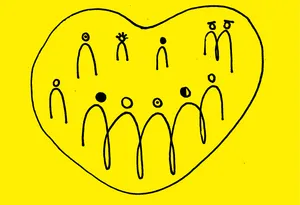
How to ensure participation from marginalised groups as assembly members? How to ensure that the voices of the most vulnerable are being heard and valued?
Input Throughput
Climate change adaptation and mitigation are among the most pressing challenges facing all living beings today. Addressing the causes and consequences of the climate crisis requires systemic change with lasting, transformative effects, and goes far beyond individual action.
Climate Citizens’ Assemblies (CCAs) bring together a diverse group of citizens, selected by a stratified lottery process, to learn about climate issues, deliberate collectively, and produce joint recommendations.
Placeholder text
While most scholarship assesses CCAs through political science or public-policy lenses, we go a step further by viewing CCAs through a social-ecological design lens — both analytically and operationally. We consider not only policy outputs, but also the relationships, practices and ideas that shape future-making processes within CCAs.
What if Climate Citizens’ Assemblies were not just tools for public consultation, but emancipatory spaces for reimagining society itself — spaces to share knowledge, make decisions, and care for communities and environments together?
Patterns are grouped by the phase of the assembly they speak to.
How to ensure participation from marginalised groups as assembly members? How to ensure that the voices of the most vulnerable are being heard and valued?
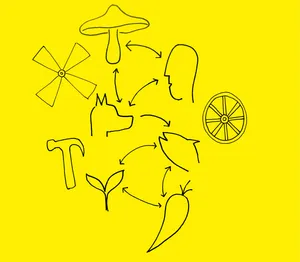
Which forms of knowledge are present? Whose narratives are given space? Who are invited as testimonials?

How to envision social-ecological transformations? How to foster imagination beyond business-as-usual?